

Why You Get a Callus on the Inside of Your Big Toe (And How to Fix It)
A callus on the inside of the big toe is extremely common. I see it frequently in patients who come into the clinic with foot problems such as:
- plantar fasciitis
- metatarsalgia
- forefoot pain
- bunion irritation
- calf tightness
Although this callus often isn’t very painful, it actually tells an important story about how your foot is functioning when you walk.
Understanding why it develops can help you address the real biomechanical problem, rather than just trimming the callus repeatedly.
Watch the Full Explanation👇👇👇
What Is a Callus?
A callus is simply a thickened layer of skin that develops as a protective response.
It forms when the skin experiences:
- repeated friction
- shear forces
- excessive pressure
Over time, the body thickens the outer skin layer to protect the tissues underneath.
This is why calluses commonly develop on the feet, hands, and areas exposed to repeated mechanical stress.
A callus on the inside of the big toe is particularly common because that area can experience significant pressure during walking.
Why a Callus on the Big Toe Tells a Biomechanical Story
When I see a callus on the inside of the big toe or along the bunion area, it often reveals how the foot is moving during gait.
Several biomechanical factors commonly contribute.
1. Arch Collapse (Flat Foot Mechanics)
When the foot collapses inward during walking, the big toe tends to rotate inward.
This causes increased:
- pressure
- friction
- shearing
along the inside of the big toe.
As the body repeatedly pushes off this area during walking, the skin thickens and forms a callus.
2. Leg Length Differences
It is also common to see this type of callus on the longer leg.
The longer leg often experiences slightly more loading and tends to collapse inward more during walking, increasing stress on the big toe.
3. Tight Calf Muscles
One of the most common contributors is calf tightness.
When the calf muscles are tight, the ankle cannot bend forward properly. When this happens, the body compensates by:
- turning the foot outward
- collapsing the arch
- pushing off the inside of the big toe
This repeated movement increases shear forces and leads to callus formation. See it in slow motion HERE 👇👇👇
Why This Can Lead to a Bunion
When the foot repeatedly collapses and the big toe is pushed inward, it can gradually contribute to a valgus position of the big toe, which is associated with bunion development.
This makes it even more important to address the underlying mechanics of the foot.
Treatment Strategy #1: Support the Arch with Orthotics
One of the first things I often recommend is using an orthotic insert.
An orthotic helps:
- support the arch
- keep the subtalar joint more neutral
- prevent the foot from collapsing inward
When the arch is supported, the body pushes off the big toe in a more straight-forward direction instead of rotating inward.
This reduces the friction that causes the callus.
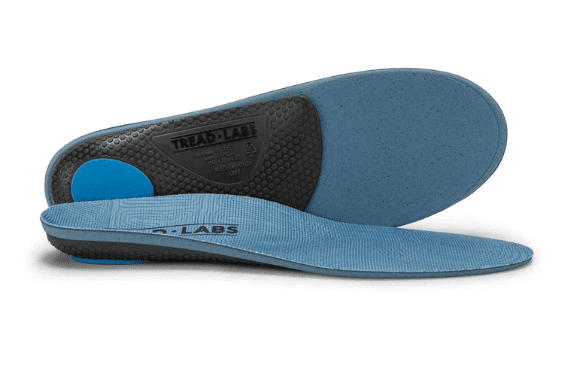
⭐Here is my all time favorite semi-custom orthotic: Tread Labs
Treatment Strategy #2: Safely Reduce the Callus
Even though the callus forms as protection, it can become thick and uncomfortable.
It can also:
- catch on socks
- feel sharp
- take up space inside the shoe
A safe way to manage it is to gently reduce the thickness using a pumice stone or electric callus remover.
⚠️ Important note:
If you have diabetes, poor circulation or you are at high risk of infection, you should consult a medical professional before trimming calluses.
Treatment Strategy #3: Stretch the Big Toe and Calf
Improving flexibility can significantly reduce the forces that create the callus.
One effective stretch involves using a towel to stretch both:
- the calf muscle
- the big toe tendon (flexor hallucis longus)
How to perform the stretch
- Place a towel under the forefoot.
- Hold the ends of the towel.
- Pull the foot toward you while gently extending the big toe.
- Hold for 30 seconds.
- Perform 5 repetitions with a short rest between each stretch.
This helps improve mobility and reduces the tendency for the foot to rotate outward during walking.
Treatment Strategy #4: Advanced Calf Stretching
Calf tightness is often a major driver of foot problems.
Conditions frequently associated with tight calves include:
- plantar fasciitis
- Achilles tendinitis
- metatarsalgia
- forefoot calluses
- nighttime calf cramps (Charlie Horses)
Regular calf stretching can significantly reduce pressure on the forefoot.
Slant board stretching is particularly effective because it allows for a deeper and more controlled stretch.
Many patients notice improvements such as:
- reduced forefoot pressure
- improved stair descent
- better squatting ability
- fewer calf cramps
- less callus formation
Recommended protocol using a slant board (video demo)
- Hold stretch: 30 seconds
- Repetitions: 5
- Frequency: 3–4 times per day
Treatment Strategy #5: Choose Proper Footwear
Your shoes also play an important role.
Shoes should:
- have adequate width in the toe box
- avoid tight pressure over the bunion area
- provide a stable base
- accommodate orthotics if needed
Shoes that are too narrow and with high heels can increase friction and worsen callus formation.
The Key Takeaway
A callus on the inside of the big toe is usually not just a skin problem.
It is often a biomechanical signal that something in the foot’s movement pattern needs attention.
Addressing the root causes—such as arch collapse, calf tightness, and improper footwear—can help reduce the stress that leads to callus formation.
Want to Improve Your Foot Mechanics?
If you’d like to improve the strength of your arch and reduce foot collapse, check out this video:
7 Exercises to Strengthen Your Arch